
Catch More Walleyes with Spinner Rigs
Introduction
If you want to catch more walleyes, spinner rigs are hard to beat. They put your bait right where fish are holding and create just enough flash and vibration to trigger strikes. Effective in spring and summer, and suitable for use in rivers, lakes, or reservoirs, these rigs provide anglers with versatility and control, enabling them to reach walleyes under varying conditions without overcomplicating their setup.
Spinner Rig Basics & Advantages

Walleye spinner rigs, also called crawler harnesses, have been a staple in walleye fishing for over a century. Originating with innovators like John Hildebrandt, these rigs pair spinning blades with two Octopus-style hooks on a short leader, creating a reliable, effective presentation. Their dual-hook design improves bait stability and increases hookup chances, especially when using nightcrawlers or leeches.
Why Spinner Rigs Stand Out
- Higher Hookup Rate: Two hooks increase the likelihood of landing walleyes, especially finicky fish that may ignore single-hook presentations.
- Better Bait Presentation: Dual hooks maintain natural bait alignment and balance, avoiding unnatural movement that could spook wary fish.
- Versatility: Unlike crankbaits or single jigs that excel only at specific depths or speeds, walleye spinner rigs perform well on the bottom or suspended, whether drifting or slow-trolling.
- Attractiveness: The spinning blade adds flash and vibration, effectively drawing strikes from both cautious and aggressive walleyes.
Their simple construction also allows anglers to experiment with blade types, sizes, and colors without complicated adjustments, making them both effective and adaptable across rivers, lakes, and reservoirs.
If you're looking for convenience and consistent performance, Dr.Fish spinner rigs offer a solid option. With high-quality components like rust-resistant blades and durable beads, these rigs are designed to perform well in varying water conditions. They're easy to use, so you can spend more time fishing and less time adjusting your setup.
Blades: Types, Sizes, and Colors

Blades are the heartbeat of a spinner rig. They generate flash and vibration that walleyes use to locate bait from a distance. Different blade types serve different purposes:
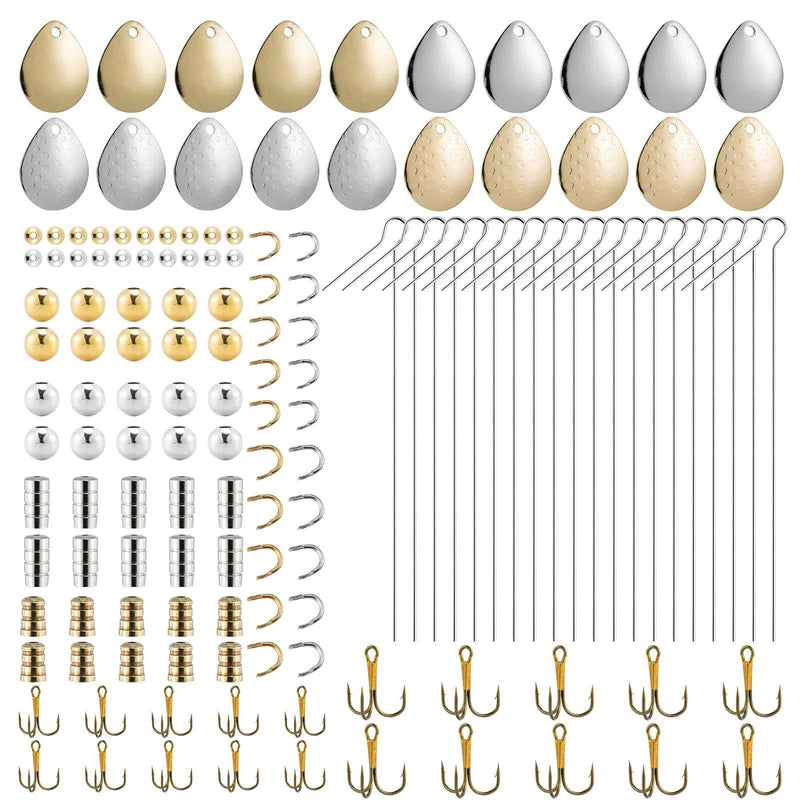
- Colorado Blades: Round and wide, Colorado blades are the most commonly used style on walleye spinner rigs. They produce strong vibrations and excel at slow trolling or in murky water. Deep-cup versions enhance the “thump,” attracting lethargic fish.
- Indiana Blades: Offer a balanced mix of flash and vibration, suitable for moderate trolling speeds. They are versatile in both stained and clear water.
- Willow Blades: Long and narrow, they provide maximum flash but minimal vibration. Ideal for fast trolling in clear water or for fish that respond to visual cues rather than vibration.
- Propeller/Butterfly Blades: Lightweight and easy to spin at almost any speed. They are excellent for suspended fish or ultra-clear waters, often paired with floating bodies.
When selecting blades, consistency and balance matter as much as shape and size. Dr.Fish spinner blades are made from premium materials with high-quality coatings, delivering smooth rotation and clean, consistent flash that attracts walleyes across a wide range of trolling speeds and water conditions.
Blade size matters as well:
- Small blades (#2–#3) work best in smaller lakes, pressured waters, or when walleyes are finicky and responding better to subtle presentations.
- Larger blades (#4–#6) push more water, create stronger flash, and are better for covering water or targeting more aggressive fish.
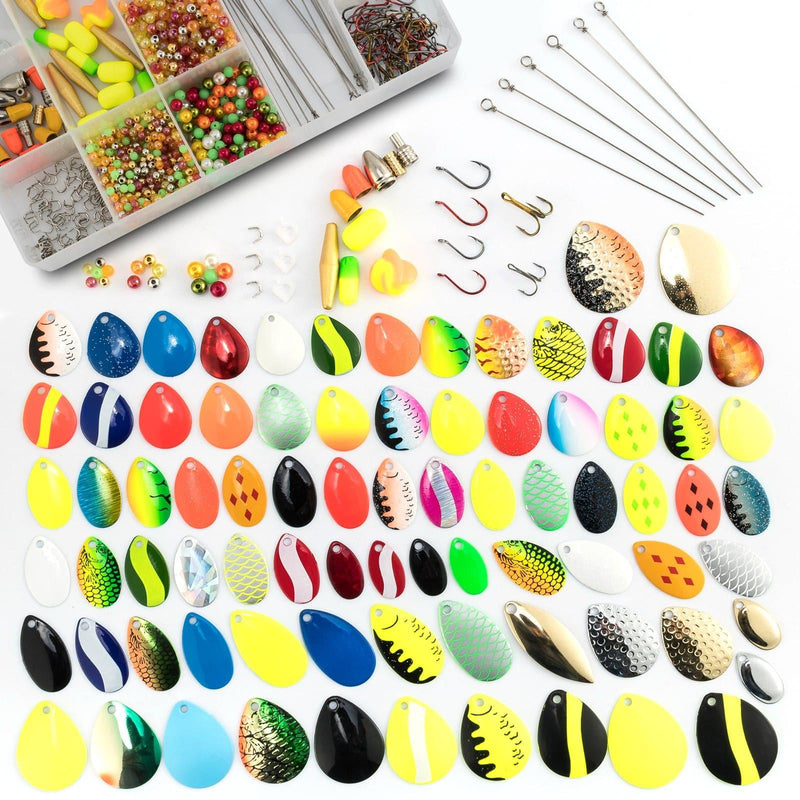
Blade color should match water conditions:
- Metallic finishes (silver, gold, copper) excel in clear water.
- Bright colors like chartreuse or orange stand out in stained or dirty water.
- UV-reflective finishes can be effective during low-light periods, such as early morning, late evening, or overcast days.
Keeping a variety of blade sizes and colors on hand allows anglers to quickly adapt to changing water clarity, light conditions, and fish behavior without re-rigging entirely.
Hooks, Bodies, and Line Selection
Hooks
Modern spinner rigs almost always use two Octopus-style hooks spaced 3–4 inches apart. This setup provides optimal hooking efficiency with minimal snag risk. Nightcrawlers or leeches are ideal baits for this hook configuration, providing natural movement and scent that trigger strikes.
Bodies
The body of a spinner rig serves multiple purposes. It provides spacing between the hooks and the blade, creating a smooth rotation and allowing the blade to spin freely. Common materials include beads, plastic tubes, and small floats. Beads can be solid or glow-in-the-dark, adding visual attraction or subtle vibration. Plastic tubes help protect the leader from abrasion and maintain proper alignment. Floating bodies lift the rig slightly off the bottom, reducing snags over rocks or weeds, while sinking bodies keep the rig close to the bottom for bottom-hugging fish.
Clevis

Clevises attach the blade to the rig and are essential for creating proper spin. Plastic clevises allow quick blade swaps, letting anglers experiment with blade size or color without retying. Metal clevises offer durability and consistent spin but may require more careful handling to avoid line wear. Choosing the right clevis ensures the blade spins smoothly, maintaining the intended flash and vibration.
Line
Fluorocarbon leaders (8–12 lb) are the standard for spinner rigs due to their low visibility and abrasion resistance. Mainline options include monofilament for stretch and cushion, or braided line for sensitivity over structure. The combination of appropriate leader strength and mainline type prevents tangling and ensures consistent bait presentation.
Weights & Delivery Systems
Presenting your spinner rig at the correct depth is crucial for success. Anglers commonly use several delivery systems:
- Bottom Bouncers: Keep the rig near the bottom, allowing you to cover water efficiently while maintaining a natural presentation.
- 3-Way Rigs: Include adjustable droppers for precise depth control, especially useful for suspended fish or fishing over uneven terrain.
- Bead Chains & Snap Weights: Ideal for finesse situations, particularly in reservoirs or slower-moving rivers.
- Planer Boards: Allow multiple rigs to be trolled simultaneously without tangling, spreading bait to maximize coverage.
Leader length and weight should be adjusted according to water depth, current, and trolling speed. A typical leader ranges from 36 to 60 inches. Slow-trolling speeds of 0.8–1.2 mph work best with Colorado blades, while Willow blades perform better at 1.4–1.6 mph. Matching speed, weight, and blade type ensures the rig reaches the desired depth while maintaining a natural movement.
Fishing Conditions & Strategies

Spinner rigs are highly adaptable across seasons and environments:
- Seasonal Patterns: In early spring, walleyes respond to smaller blades and subtle colors. Mid-summer fish often require larger blades and slightly heavier bottom bouncers to provoke bites.
- Water Clarity: Clear water favors metallics and subtle flash; murky water calls for brighter, more vivid colors. UV-reflective finishes help attract fish in low-light conditions.
- Waterbody Differences: Rivers, lakes, and reservoirs each have unique currents, vegetation, and structural elements. Drifting, slow-trolling, or casting are all effective depending on the situation.
- Fish Behavior: Finicky walleyes respond better to smaller blades and subtle hues, while aggressive walleyes can be triggered by larger blades and more pronounced vibration. Keeping multiple blade sizes, body colors, and leader lengths ready allows anglers to quickly adapt.
- Fine-Tuning: Observing depth charts, using sonar, and adjusting leader length and speed improve catch rates. For example, when walleyes suspend above weedlines, raising the rig a few feet with floating beads can make the difference between bites and misses.
By understanding these environmental factors and fish behavior, anglers can make informed adjustments that maximize the effectiveness of their spinner rigs in any conditions.
Conclusion
Spinner rigs work not because they are complicated, but because they are adjustable. By matching blade style, size, and color to water clarity and fish mood, anglers can fine-tune their presentation without overthinking it. This balance of simplicity and control is what makes spinner rigs effective across a wide range of walleye fisheries.

0 comments